In a nutshell
- 🔬 The science: citric acid breaks mineral-bonded grime while peel-derived d‑limonene dissolves oils; warmth and a pinch of salt add speed and gentle abrasion for fast results.
- ⏱️ Five-minute method: warm the surface, scrub with a halved lemon dipped in salt, allow 2–3 minutes contact time, then wipe with a damp microfibre and buff dry—don’t neutralise the acid with bicarbonate mid-clean.
- 🧪 Surface safety: great on stainless steel, enamel, and glass; avoid natural stone (marble, limestone) and keep contact brief on bare aluminium; seal wood first to prevent drying.
- 🆚 When it wins (and when it won’t): ideal for fresh splatter and film with fewer VOCs; not a miracle for baked-on carbon—use heat and a specialist degreaser before finishing with lemon.
- 💡 Pro tips: low-cost, biodegradable routine; strain lemon juice into a sprayer with a few drops of food-safe lemon oil, refrigerate, and use within a week; leftover rind freshens the sink.
Grease splatters creep across hobs, oven doors cloud, and extractor hoods gather a sticky film that resists the average wipe-down. Yet a single lemon can turn the fight in your favour. Its citric acid tackles build-up, and aromatic d‑limonene from the peel loosens oily residues. The result is swift, low-cost, and kinder to the air you breathe. In five minutes, you can shift stubborn grease and restore shine without harsh fumes. Here’s how and why it works, the pitfalls to avoid, and the quick method that lets you move from grime to gleam while the kettle boils.
The Chemistry Behind Lemon’s Cleaning Power
Two forces drive lemon’s cleaning punch. The juice is rich in citric acid (pH around 2), which disrupts the bonds that help greasy films cling to metal and glass. It also chelates mineral ions, so mixed grime—think oil plus hard water residue—lets go more readily. Then there’s the peel. Rub a cut lemon and you release d‑limonene, a citrus solvent that dissolves oily residues with surprising ease. It’s the duet of acid and natural solvent that makes lemons feel so effective.
Heat speeds the chemistry. Warm surfaces thin oils, letting the acid and limonene penetrate. Pressure helps too. A light abrasive—fine salt—adds bite without scratching most robust kitchen finishes. Lemon doesn’t “saponify” fat like a strong alkali; it loosens, lifts, and helps you wipe oil away cleanly. Add water and mechanical action, and you’ve got a fast, elegant method that cuts through fresh splatter and sticky films on steel, enamel, and tempered glass.
There are limits. Carbonised, polymerised residues on old pans won’t surrender to fruit alone. For those, pair citrus with heat and a dedicated degreaser later. But for day-to-day grease? Lemon excels, especially where you want a biodegradable, low-odour approach that leaves a fresh scent rather than a chemical fog.
Five-Minute Method: Step-By-Step
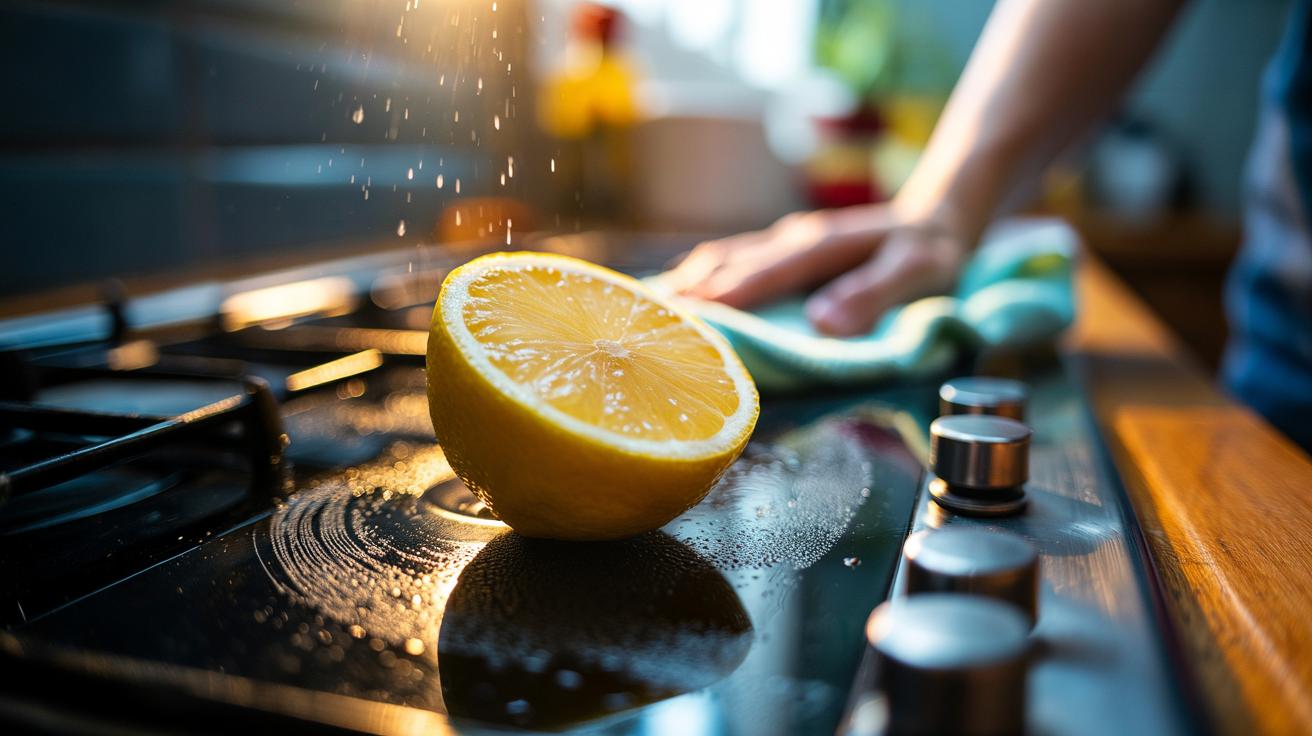
First, clear loose crumbs. Warm the surface with a cloth rinsed in hot water; two passes are enough to soften the film. Halve a lemon and dip the cut face into fine salt for a gentle scour. Now scrub in small circles, working from clean to dirty areas to avoid smearing. For vertical spots—tiles, splashbacks—squeeze juice onto the cloth, then rub to prevent drips. Give the juice two to three minutes of contact time for the chemistry to bite. Finally, wipe with a damp microfibre, then buff dry to banish streaks.
For oven doors and hob rings, a second pass may be needed. Let the lemon rest over the worst patches while you wipe surrounding zones. Rinse cloths often; you’re lifting oil into the fibres and you want it gone, not redistributed. Avoid mixing with bicarbonate at this stage—it neutralises the acid. If you crave extra scrub, add more salt or use a soft brush around knobs and trims.
| Surface | Safe With Lemon? | Contact Time | Notes |
|---|---|---|---|
| Stainless steel | Yes | 2–3 minutes | Wipe and dry quickly to avoid water spots. |
| Enamel/glass | Yes | 3–5 minutes | Buff dry for a streak-free finish. |
| Natural stone (marble, limestone) | No | — | Acid etches stone—use a pH‑neutral cleaner. |
| Unsealed aluminium | With care | Under 1 minute | Rinse promptly; prolonged acid contact can dull. |
Do not use lemon on marble, limestone, or travertine, and keep it brief on bare aluminium. Seal wood surfaces first; citrus can dry out raw timber. Finish by washing your cloth hot—grease lingers—and enjoy the quiet triumph of a clean, citrus-bright kitchen.
When Lemon Beats Detergent (and When It Doesn’t)
On fresh splatter and clingy films, lemon feels magical. The d‑limonene in the peel melts light oils without the stickiness some soaps leave. Citric acid clears soap scum and mineral traces that make grease harder to budge next time. You also avoid breathing heavy VOCs or coating surfaces with aggressive alkalis. That’s a win in small kitchens with limited ventilation, and for families chasing lower-impact cleaning.
Yet expectations matter. Lemon won’t erase heavy, baked-on carbon inside an old oven door in one pass. There, a staged strategy wins: scrape, apply heat, use a specialist degreaser, then finish with citrus for shine and scent. If you’re dealing with delicate finishes—stone composites, lacquered woods—reach for pH‑neutral products. Also, citrus fragrance isn’t a guarantee of strength: some “lemon” sprays are perfumes over standard surfactants, not true citrus solvents.
Think cost and convenience too. A single lemon cleans a hob and splashback for pennies, and the leftover half freshens the sink disposal. For regular maintenance, decant strained lemon juice into a spray bottle, add a few drops of food-safe lemon oil, and label with the date. Use within a week for best potency, keeping the bottle in the fridge to slow microbial growth.
Lemon’s appeal is timeless: fast action, pleasing scent, and a visible payoff that shames sticky films in minutes. By pairing natural citric acid with peel-derived d‑limonene, you disrupt grease’s grip and make wiping genuinely effortless. Keep salt for safe abrasion, avoid stone, and let brief contact time do the heavy lifting while you get on with your evening. The method is simple, thrifty, and satisfying. As you rethink your cleaning kit, which stubborn spot in your home will you challenge with a five‑minute citrus test first?
Did you like it?4.5/5 (27)