In a nutshell
- 🧪 The science: hard water stains are limescale (calcium carbonate); 5–8% acetic acid in white vinegar dissolves them fast, and thin deposits can vanish in 30 seconds if the surface stays wet.
- ⚙️ Fast method: apply warm vinegar via spray or a soaked cloth, maintain a glossy wet film, allow 30–120 seconds’ dwell, then wipe with a microfibre cloth; squeegee glass, polish chrome, and for kettles use a 1:1 vinegar–water descaling, then rinse thoroughly.
- 🛡️ Safety first: Do not use on natural stone or unsealed grout, avoid harsh abrasives, and remove small parts (aerators, shower heads) to soak gently; never mix vinegar with bleach due to toxic gases, and patch-test finishes.
- 🔄 When vinegar lags: add a drop of washing-up liquid to cut soap scum, step up to citric acid (5–10%) for heavier deposits, or use a labelled commercial descaler—always follow instructions and choose the least aggressive method that works.
- 🚿 Prevention pays: rinse, then dry to stop minerals re-depositing; daily squeegeeing of shower screens and quick wipes of taps keep scale at bay and reduce the need for deep descales.
Hard water leaves tell-tale rings on taps, crusted marks on shower screens, and a dull film on kettles and glassware. It looks stubborn. It isn’t, if you reach for ordinary white vinegar. Thanks to its acetic acid content, vinegar can cut through fresh mineral deposits astonishingly fast—sometimes in 30 seconds flat. The trick is simple chemistry, clever contact time, and using the right technique for the right surface. Here’s how to make stains vanish before your tea cools, why the method works, and when to switch tactics for heavy build-up or delicate fixtures. No gimmicks, no pricey chemicals. Just science you can pour from a bottle.
The Chemistry Behind Vinegar’s 30-Second Magic
Hard water stains are mostly limescale—crystalline deposits of calcium carbonate and magnesium salts. They’re alkaline. Vinegar is slightly acidic, usually 5–8% acetic acid. When acid meets the alkaline carbonate, a tidy reaction unfolds: the scale dissolves, releasing carbon dioxide and forming soluble salts that rinse away. That’s why light haze on glass, chrome, or ceramic can disappear in seconds once the acid makes full contact. The thinner the deposit, the faster the reaction. Fresh spots respond first; older crusts resist, because they’re thicker and often contaminated by soap scum and iron oxides, which slow penetration.
Temperature and agitation matter. Warm vinegar speeds diffusion and softens blended grime; a microfibre cloth boosts contact, pushing liquid under the deposit. Keep the surface wet, not just damp. Droplets work, but a soaked pad or a folded paper towel saturated with vinegar works better. Crucially, don’t wipe too soon. Give the acid a short dwell period, then a quick rub. The fizz is quiet, the effect dramatic. For stubborn areas, chelating helpers, like a pinch of table salt or a drop of washing-up liquid, can disrupt grime that shields the scale beneath.
Step-by-Step Method for Fast Stain Removal
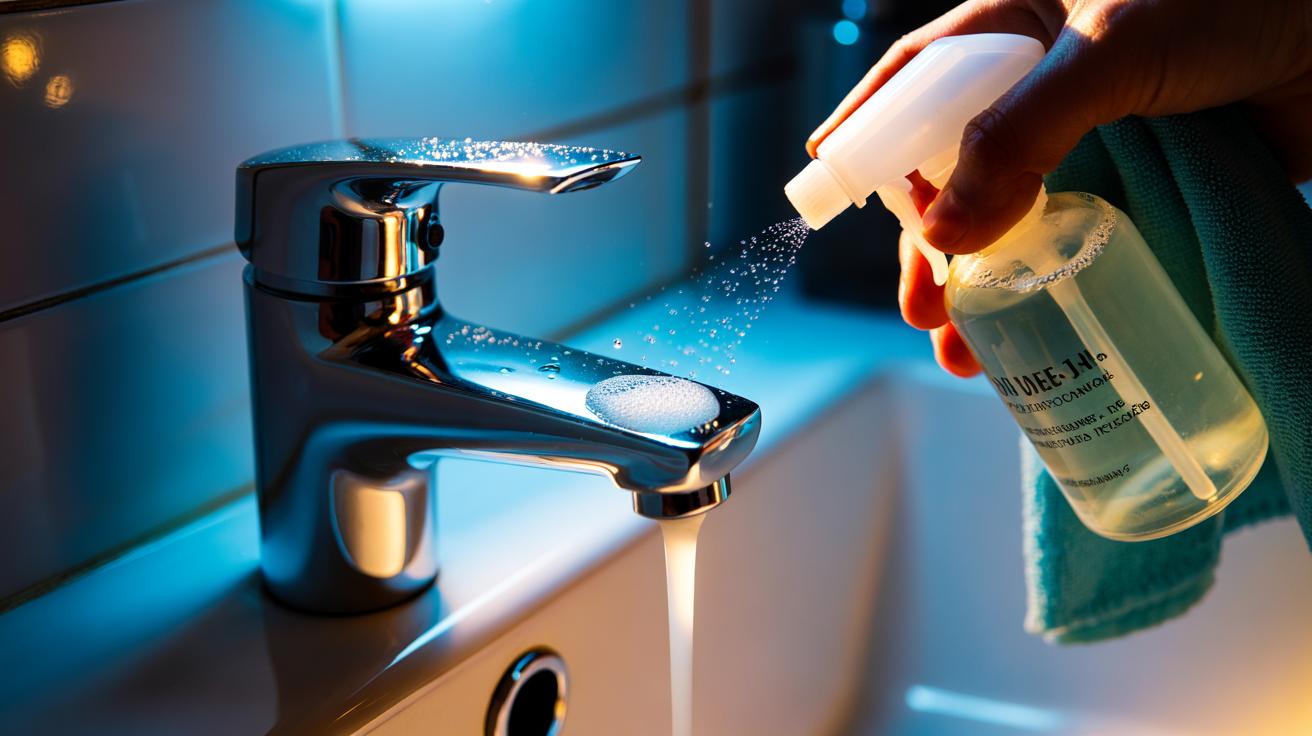
Start with the basics. Put on gloves if you have sensitive skin. Ventilate the area. Decant plain white vinegar into a spray bottle or warm a cup in the microwave (not boiling). On taps, valves, shower heads, and tiles, spray generously or press on a vinegar-soaked cloth to ensure full coverage. Maintain a glossy wet film over the mark. Wait 30 seconds for light haze. If the stain is older, 2–3 minutes is reasonable. Don’t let it dry out; top up the wetness if needed.
Use a non-scratch pad or microfibre cloth to wipe. Work in small circles. On glass shower doors, squeegee from top to bottom to prevent streaks. On chrome, polish dry immediately for a mirror finish. For kettle interiors, fill with a 1:1 vinegar–water mix, bring just to the cusp of a boil, unplug, and let sit for 5–10 minutes. Rinse thoroughly. A thin layer often disappears within 30 seconds of contact; thicker deposits need repeat passes. To prevent reappearance, finish with a rinse using clean water and buff dry. Water left to evaporate will re-deposit minerals, undoing your good work.
Surfaces, Safety, and Common Mistakes
Vinegar is a gentle acid, but it is still acid. That matters. Do not use vinegar on natural stone such as marble, limestone, or travertine; acetic acid can etch the surface and dull the polish. Skip it on unsealed grout, rubber-backed components, and some plated finishes where coatings are compromised. Metal aerators and shower heads? Safe, with caveats: remove the part if possible, soak in warm vinegar for 5–15 minutes, then scrub with a soft brush. Rinse well. On chrome taps, avoid leaving soaked pads in place for hours—short, targeted sessions are enough.
Common errors? Using too little liquid, wiping immediately, and mixing vinegar with bleach (never do this). The bleach combination releases toxic chlorinated gases. Another mistake: scrubbing with harsh abrasives that gouge surfaces and create micro-scratches that trap future scale. If you’re cleaning electronics-adjacent fixtures like instant hot taps, keep vinegar off electrical housings. Patch-test on an inconspicuous spot when in doubt. And remember: prevention beats cure. A quick daily squeegee of the shower screen and a wipe-down of taps after use drastically reduce build-up. When deposits can’t form, vinegar is rarely needed, but remains your ace for quick rescues.
When to Choose Alternatives and What to Avoid
Some deposits won’t budge in half a minute because they’re layered with soap scum (fatty acids) or tinged with iron. In those cases, add a drop of washing-up liquid before the vinegar to break surface tension, or try citric acid powder dissolved in warm water for a slightly stronger yet still kitchen-safe acid. Commercial descalers have their place for kettles or heating elements when heavy scale returns quickly. Choose products that disclose acid type and concentration, and follow UK safety guidance on ventilation and contact time. Never escalate to harsh chemicals without reading the label.
| Agent | Active Acid | Typical Strength | Best For | Safe For | Avoid | Dwell (Light Stains) |
|---|---|---|---|---|---|---|
| White Vinegar | Acetic acid | 5–8% | Fresh limescale, glass haze | Glass, ceramic, chrome | Natural stone, unsealed grout | 30–120 seconds |
| Citric Solution | Citric acid | 5–10% w/v | Heavier deposits, kettles | Most metals, plastics | Stone surfaces | 2–5 minutes |
| Lemon Juice | Citric acid | ~5–6% | Spot cleaning, odour control | Glass, ceramic | Stone, sensitive finishes | 1–3 minutes |
| Commercial Descaler | Various (often stronger acids) | Varies | Chronic scale, appliances | Per label | Per label | Per label |
If you face reddish or brown staining, consider iron deposits; try a product formulated for rust, then finish with vinegar for the remaining carbonate. For shower screens with a wax coating, check manufacturer guidance. The golden rule remains: use the least aggressive method that works. Vinegar earns its place because it’s cheap, effective, and, with smart technique, astonishingly fast.
In short, vinegar’s secret is simple: an accessible acid, given time to touch every crystal of scale. Apply wet, wait briefly, wipe, rinse, and dry. For light deposits, the transformation can be immediate; for stubborn layers, repeat or escalate to citric acid. Keep stone out of bounds. Keep bleach far away. Keep your microfibre to hand. Ready to test the 30-second clean on your own taps today, or will you start with the shower screen and time the sparkle? What surfaces in your home are crying out for a fast, science-backed rescue?
Did you like it?4.5/5 (27)