In a nutshell
- ⚡ Achieve a 3-minute odour drop by placing baking soda close to the source in a thin, wide layer that rapidly cuts airborne concentration via adsorption and neutralisation.
- 🧪 The chemistry: sodium bicarbonate (NaHCO3) has a porous surface that adsorbs VOCs, while its mild alkalinity tames acidic odours; a light moisture film and buffering speed the effect.
- 🛠️ Fast fixes: use shallow dishes in fridges and cupboards, a tablespoon under bin liners, teaspoons in shoes, and a light carpet dusting then vacuum; prioritise thin layer, wide surface area, and close placement.
- ✅ Safe, smart use: keep it dry, avoid mixing with oils, patch-test fabrics, don’t rub glossy finishes, store sealed, and remember it’s deodorising, not sanitising—remove the source and clean.
- 🔄 When it’s not enough: tackle amine/fishy smells with vinegar, persistent smoke with activated charcoal or zeolite, and organic spills with enzymes; add ventilation and work sequentially.
There is an old-fashioned trick that still astonishes for its sheer speed: tip a little baking soda into the right place and the pong calms in minutes. Not hours. Minutes. In kitchens, cars, and crowded flats, volatile molecules skate through the air, finding every curtain and cushion. Baking soda doesn’t simply perfume over them. It works on contact, absorbing and neutralising the culprits that make our noses wrinkle. Used correctly, sodium bicarbonate can noticeably tame everyday odours in about three minutes, buying you time to clean properly later. Here is how the chemistry works, how to deploy it fast, and when you’ll need something stronger.
The Science Behind Baking Soda’s Speed
At the heart of the trick is sodium bicarbonate (NaHCO3), a mildly alkaline salt with a crystalline, porous structure. Those micro-surfaces act like tiny parking bays for volatile organic compounds, enabling adsorption at speed. Simultaneously, its alkalinity neutralises many acidic odours—think acetic acid from stale food or certain sulphurous notes—by converting them into less volatile salts. In damp air, a thin moisture film forms on the powder, which helps dissolve odour molecules and ushers them into reactions that reduce their volatility.
That dual action—physical adsorption plus chemical neutralisation—explains the rapid effect. Put the powder right at the source and early molecules are captured immediately, lowering the concentration that reaches your nose. Placement is everything: close proximity transforms a slow passive deodoriser into a fast, targeted sponge. You’ll notice the quickest wins with bins, fridges, musty cupboards, and shoes. Results can be more modest with oily or strongly basic smells (like fishy amines), where an acidic counter-agent is often better. But for everyday kitchen whiffs and stale-room funk, bicarbonate excels.
It also behaves as a buffer, moderating pH shifts around the powder. That buffering stabilises certain reactions and reduces spikes in volatile release. No mystery. Just simple, reliable chemistry playing out where it counts: on particle surfaces and in a microscopic film of water, seconds after you set it down.
Three-Minute Fixes for Everyday Smells
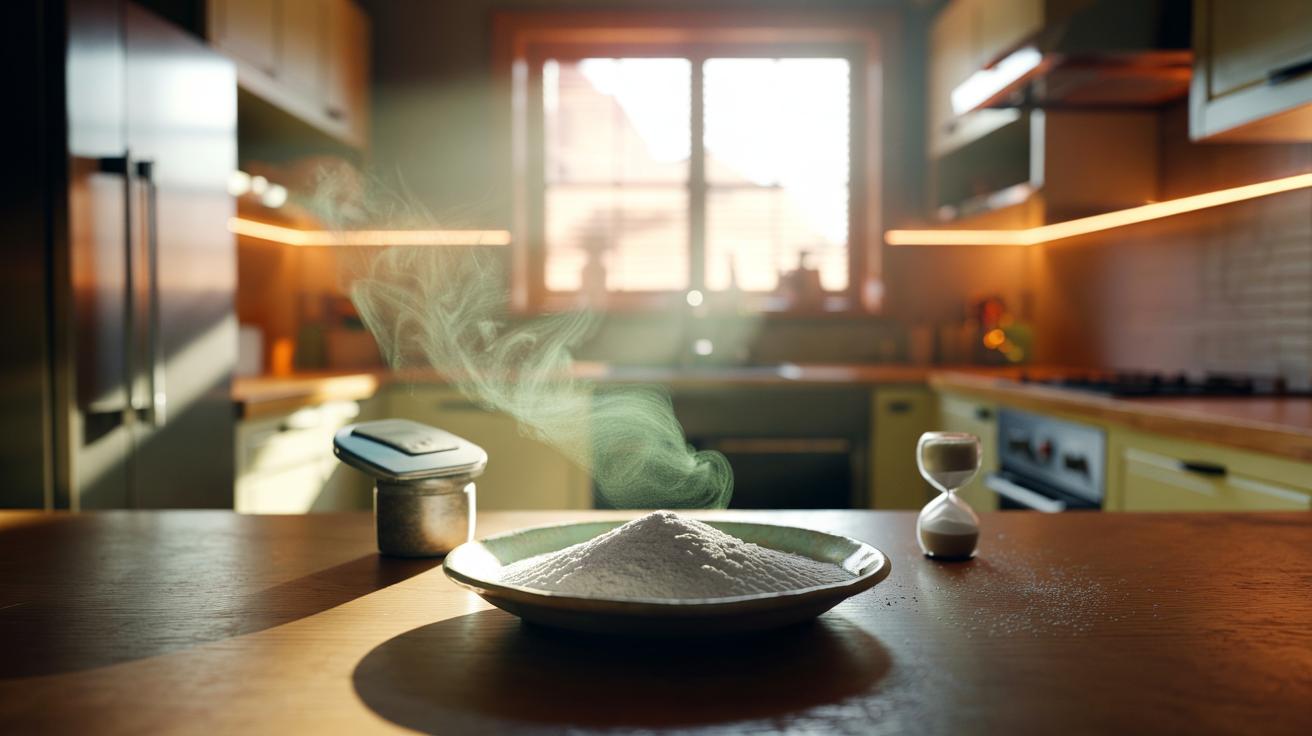
Speed comes from method. For a fridge or cupboard, open a shallow dish and spread 2–4 tablespoons of baking soda in a thin layer. Place it directly beside the source—near the cheese box or the back panel where drips collect. Crack a window or door and wait. Within roughly three minutes, the “edge” of the odour should soften noticeably, often the difference between tolerable and overpowering. For rooms, park a broad plate of powder on a shelf at nose height and one near the floor to intercept air currents.
For soft furnishings, lightly sprinkle a fine dusting over the fabric, leave it 10–15 minutes to absorb, then vacuum slowly with a clean filter. In shoes, tap in a teaspoon per trainer, shake to coat, and knock out any excess before wearing. For bins, a tablespoon under the liner keeps sour drips in check; add another pinch after each bag change for maintenance. Microwaves respond well to a cup of hot water with a teaspoon of bicarbonate: steam loosens films, bicarbonate dampens odours, and a quick wipe finishes the job.
| Source | Quantity | Time to Notice | Best Method | Notes |
|---|---|---|---|---|
| Fridge | 2–4 tbsp | ~3 minutes | Shallow open dish | Replace monthly for freshness |
| Bin | 1 tbsp (base) | ~3–5 minutes | Sprinkle under liner | Add a pinch after bag change |
| Shoes | 1 tsp per shoe | ~3–10 minutes | Shake, rest, tap out | Use sachets for less mess |
| Carpet | Light dusting | ~5–15 minutes | Vacuum after dwell | Patch test colour-fastness |
How to Use It Safely and Effectively
Use a thin layer in wide dishes or plates. Surface area matters; a crusted pile performs worse than a spread-out dusting. For cupboards, shoes, or gym bags, consider breathable sachets (coffee filter paper, muslin, or a clean sock) to contain powder while allowing airflow. Label them and refresh every 30 days. For carpets and upholstery, test an inconspicuous patch first, especially on delicate dyes. The powder is mildly abrasive; on glossy plastics or soft finishes, avoid vigorous rubbing and vacuum thoroughly to prevent residue.
Don’t mix bicarbonate with fragrance oils in the same bowl—the oils can coat particles and blunt adsorption. Keep it dry for passive odour work; add water only when you intend to wipe down surfaces. If you can put the powder within 10–20 cm of the source, you accelerate deodorising dramatically. In kitchens, it’s safe on most hard surfaces, but avoid prolonged contact with aluminium (possible dulling) and keep granules out of mechanical vents and fans. Store bulk powder sealed, away from steam, as humidity reduces potency.
Pet owners: baking soda is generally safe around animals in small environmental amounts, but don’t let pets ingest heaps of it. Skip litter trays that use specialised chemistry unless the manufacturer says it’s compatible. And remember: deodorising is not sanitising. If odours stem from mould, spoiled food, or spills, remove the source and clean; the powder is your rapid first aid and a solid aftercare, not a substitute for hygiene.
When Baking Soda Is Not Enough
Some smells resist mild alkalinity and adsorption. Fishy, amine-rich odours, heavy tobacco smoke, and oily residues often demand different tools. For amines, an acidic counter (a light wipe with diluted white vinegar on non-stone surfaces) outperforms bicarbonate. For smoky tar and complex VOCs in cars or rentals, activated charcoal or zeolite offers deeper, broader-spectrum adsorption. Enzymatic cleaners excel on pet urine, milk, or vomit, breaking down the source rather than masking it.
Use this rule of thumb: bicarbonate for swift wins on sour, stale, or general household funk; acids for fish and amines; enzymes for biological spills; charcoal for persistent, multi-compound odours. Match the chemistry to the smell and you cut remediation time dramatically. Ventilation multiplies any method’s effect—open windows, create a cross-breeze, and remove saturated textiles where possible. If an odour is embedded in paint, plaster, or foam, consider sealing primers or professional remediation; surface dusting will not reach the reservoir.
A quick comparison helps. Baking soda: cheap, safe, fast near-source, best for acidic notes. Vinegar: great on amines and some microbes, but avoid stone and grout. Charcoal: slow but deep, ideal for wardrobes, cars, and smoke-tainted rooms. Enzymes: targeted for organic residues, require dwell time. Use them sequentially, not all at once, and reassess after each stage to avoid over-treating.
Baking soda endures because it works quickly, quietly, and without synthetic perfume. Place it right, spread it thin, and give it those first critical minutes to bite into the problem. Then clean or launder to finish the job. It is the rare remedy that’s both thrifty and scientifically sound. You’ve seen how to exploit its strengths—and where to switch strategy. What stubborn odour are you keen to tackle this week, and which of these methods will you try first?
Did you like it?4.7/5 (23)