In a nutshell
- ⚡ Neutralise cling fast: dryer sheets use cationic surfactants to reduce static, plus light lubricants so fur slides off fabrics and collects on the sheet or lint filter in 60–120 seconds.
- ⏱️ Two-minute method: Wipe garments with a fresh sheet or run an air-only/low heat tumble for 1–2 minutes; don’t overload, add a dry microfibre cloth for agitation, and clean the lint filter to boost pickup.
- 🧺 Choose smart: Go fragrance-free for sensitive skin and pet bedding, plant-based for low residue, or standard anti-static for everyday clothes; use cool settings and leave space for airflow.
- 🚫 Know limits and swap tools: Avoid sheets on athletic wicking fabrics, flame-resistant kids’ sleepwear, and “no softener” items; use wool dryer balls, a damp microfibre cloth, a rubber glove, or a HEPA handheld vacuum instead.
- 🐾 Results that stick: A static-first routine halves effort—smoother fibres, fewer flyaways, cleaner clothes, sofas, and car seats—finished with a quick lint roller pass only if you want perfection.
Pet hair happens. On jumpers, car seats, sofas, and—mysteriously—black jeans minutes before you head out. The low-effort fix many busy households swear by is the humble dryer sheet. Rub it over fabric or toss it in the drum and watch the fuzz vanish. Fast. The secret isn’t magic; it’s static control and clever surfactants that loosen clingy fibres. In practice, that means less fluff stuck to you and more of it migrating to a filter or sheet in under two minutes. When time is tight, static management beats endless lint rolling. Here’s the science, the method, and the caveats so you can banish fur without fuss.
Why Dryer Sheets Attract Fur So Fast
Dryer sheets are coated with cationic surfactants. Those positively charged compounds neutralise the negative build-up of static electricity that makes pet hair cling like a magnet. Reduce the charge, reduce the cling. Simple. But something more subtle happens too. The sheet’s light lubricants create a low-friction surface, so hair and dander dislodge easily and migrate to the sheet or the lint filter. That rapid charge balancing is why hair lifts in as little as 60–120 seconds. You can almost hear the crackle fade.
On upholstery and clothing, a gentle wipe with a sheet adds a thin anti-static layer. The first pass loosens the obvious fluff. The second gathers strays. Any remaining specks are often dislodged with a quick shake or a final swipe. Inside a tumble dryer, air movement boosts the effect: fabrics agitate, the charge equalises, and the sheet becomes a mobile fur magnet. Large items—throws, hoodies, dog blankets—respond best because there’s space for air to circulate. Small time, big payoff: fewer passes, less snagging, cleaner fabric.
Step-by-Step: Remove Fur in Under Two Minutes
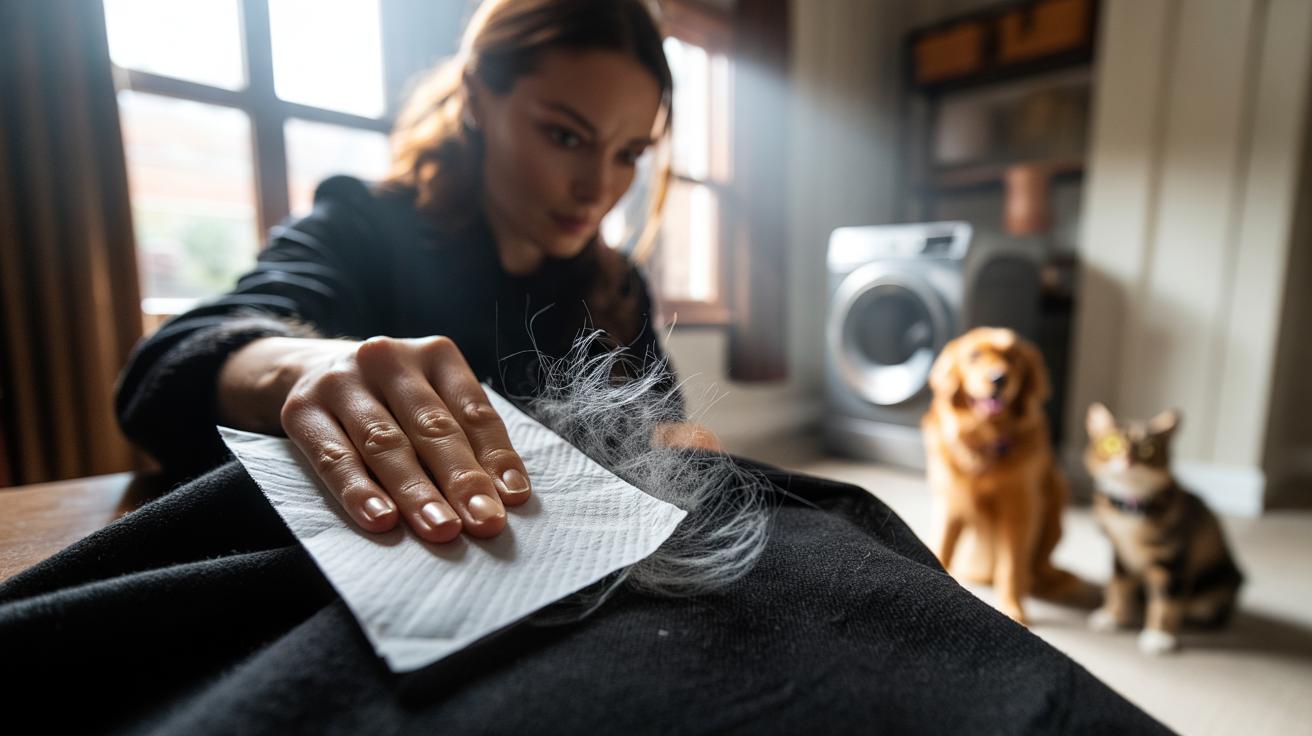
Got a coated jumper minutes before a meeting? Do this. For a garment you’re wearing, smooth the fabric with one hand and sweep a fresh dryer sheet in broad strokes with the other, moving with the grain of the weave. Short fibres detach on the first sweep; longer hairs often curl and lift on the second. Focus on high-friction zones—cuffs, hems, seat—then give the cloth a sharp shake away from you. Most everyday lint clears in 90 seconds or less. Stubborn patches? Fold the sheet and use the edge as a mini squeegee for targeted pressure.
Using a dryer? Toss the item in with one sheet and run air fluff or low heat for 1–2 minutes. Stop, check, and tap the lint filter; you’ll see fur migration instantly. For throws or dog blankets, add a clean, dry microfibre cloth to increase agitation. Avoid overloading the drum—space equals efficiency. For car seats or sofas, wipe cushions with a lightly dampened sheet, then follow with a dry one to finish. Two minutes is enough to lift visible fur from most garments; heavy shedders may need a second burst. Finish with a quick lint roller pass only if you’re aiming for photo-ready perfection.
Choosing the Right Dryer Sheet and Settings
The right product and program make the difference between “better” and “done.” Fragrance-free dryer sheets suit sensitive skin and pets. Plant-based or reduced-residue formulations help if you’re wary of coating build-up on performance fabrics. For the drum, pick air-only or the coolest setting your machine offers: you want motion and static reduction, not heat that sets creases. Overstuffed loads? Split them. Space lets fibres separate and shed. If you can hear fabric thumping rather than billowing, there’s too much in the drum. For delicate knits, skip the tumble and opt for a gentle hand wipe to avoid stretching.
| Sheet Type | Best For | Typical Time | Key Caveat |
|---|---|---|---|
| Fragrance-free | Allergies, pet bedding | 60–120 sec | Less scent masking |
| Plant-based | Low residue needs | 90–150 sec | May need two passes |
| Standard anti-static | Everyday clothes, throws | 60–120 sec | Potential coating build-up |
Machine basics matter. Clean the lint filter every time; it’s where the hair ends up. Select shorter cycles to avoid needless wear. Add a second sheet for large, hairy loads, but don’t stack products—sheet plus dryer ball is plenty. Keep technical sportswear, pure wool, and silk out of the dryer unless the care label explicitly allows. On those, hand wiping with a sheet or a damp microfibre cloth is safer and almost as quick.
When Not to Use Dryer Sheets (and Smart Alternatives)
There are limits. Avoid sheets on athletic wicking fabrics, flame-resistant children’s sleepwear, or garments marked “do not use fabric softener.” The coating can interfere with moisture management and finish. If your pet has skin sensitivities, don’t treat their bedding with heavily scented products. For those cases, reach for wool dryer balls spritzed lightly with water: they reduce static mechanically and can speed up hair release in a 2-minute air cycle. Sensitive fabrics still benefit from static control, just without surfactants.
Outside the dryer, quick alternatives shine. A slightly damp microfibre cloth swept in one direction lifts hair via capillary action. A rubber glove rubbed over upholstery gathers clumps rapidly; rinse, repeat, you’re done. For precision on seams and collars, use a lint roller sparingly after the anti-static pass—the adhesive works best once static is tamed. Handheld vacuums with a HEPA filter excel on sofas and car mats, capturing dander as well as fur. Start with static control, then collect—this order consistently halves your effort. The goal is speed, not struggle, and every method above respects that brief.
Pet ownership shouldn’t mean living in a blizzard of fluff, nor spending your evening de-linting sleeves. By targeting static first, dryer sheets turn chaos into a two-minute tidy-up, whether you’re spot-cleaning a coat or freshening a throw before guests arrive. Choose the right sheet, pick a cool cycle, keep the filter clean, and reserve alternatives for sensitive fabrics. The result is smoother fibres, fewer flyaways, and less dander on display. What’s your current pet-hair pain point—clothes, furniture, or the car—and which quick method will you try first this week?
Did you like it?4.4/5 (27)