In a nutshell
- 🧂 How it works: Salt’s hygroscopic pull and capillary action draw liquid and pigments out of carpet fibres fast, reducing set stains and odours.
- ⏱️ Minutes matter: For fresh wine, coffee and tea, heap fine salt, wait 5–10 minutes, blot, lift, and vacuum; older marks need a light cold mist first.
- 🧂➡️🧱 Choose the right grain: Fine table salt for rapid coverage, coarse/kosher for deep pile, and a 3:1 salt paste for dried spots with controlled dwell times.
- 🧵 Fibre-safe technique: Use minimal moisture, cold water on wool, and gentle blotting—avoid rubbing, coloured salts, heat, and over-wetting.
- 🧹 Finish well: After each cycle, thoroughly vacuum to remove crystals and restore texture; for ink, rust or heavy dye migration, call a professional.
Spills happen, colours bleed, and once-loved carpets look tired far too quickly. Yet in British homes from studio flats to stately terraces, a humble kitchen staple is rescuing rooms on a shoestring: salt. This granular hero wicks moisture, binds pigments, and quells odours with surprising speed. Used correctly, it can lift fresh stains in minutes and soften the look of older marks without harsh chemicals. The trick lies in timing, technique, and choosing the right grain for the job. Below, a practical, evidence-led guide to bringing old carpets back to life—fast, frugal, and kinder to carpet fibres than you might think.
How Salt Revives Carpets: Science, Speed, Results
Salt is hygroscopic. That means it attracts and holds water molecules from its surroundings, delivering a powerful osmotic pull that draws liquid out of pile and pad. Couple that with simple capillary action, and you get a wicking effect that can relocate a spill from deep within the fibre to the surface crystals you later brush or vacuum away. It’s this swift extraction, not magic, that explains why salt appears to “erase” a stain. On pale wools and hard-wearing synthetics alike, the effect can be immediate, reducing tide lines and preventing permanent set.
Speed is critical. Fresh tannin stains—think tea, coffee, red wine—are water-based and mobile. Salt traps the liquid before dyes can bind strongly to the fibre’s protein or polymer structure. Odour control is a bonus: while salt isn’t a deodoriser per se, removing the damp source reduces bacterial growth. For older, dried marks, a light rehydration (a fine mist of cold water) re-suspends residues so salt can do the lifting. Patience helps with aged stains; minutes become 15–20, not hours.
Compatibility matters. Wool hates heat and aggressive alkalinity, so cold applications are safer. Nylon and polyester forgive more, but can show darkened patches if over-wet. The rule of thumb is simple: minimal moisture, maximum blotting, and sufficient salt to cover and capture. Avoid coloured or flavoured salts that can add their own tinge. For delicate vegetable-dyed rugs, always patch-test and keep the dwell time short. That’s how you get speed and results without collateral damage.
Step-by-Step: Using Salt to Lift Common Stains in Minutes
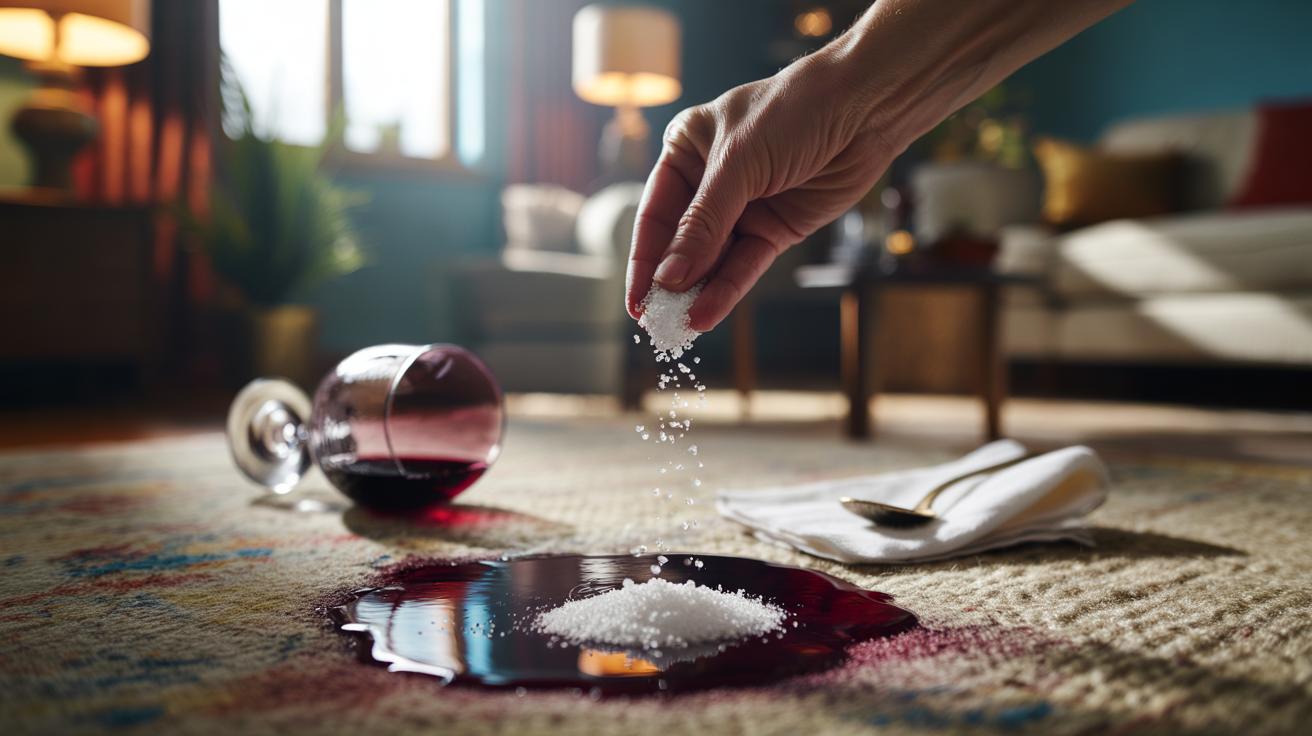
Never rub a carpet—blot only. Start by pressing a clean white cloth onto the spill to remove excess liquid. Heap a generous layer of fine salt over the damp area; it should look snowy, not sparse. Leave for 5–10 minutes as the crystals turn clumpy or pinkish with wine, brown with coffee, or amber with cola. Press down gently with another dry cloth to help transfer. Lift the salt with a spoon, then vacuum on a low setting to collect the remaining grains from the pile.
For sticky or sugary spills that have begun to set, mist the area with cold water—not enough to soak the backing—then apply salt again. If residue lingers, dab with a mild solution (one drop of washing-up liquid in 250 ml cold water), then repeat the salt layer. Keep moisture modest; the aim is to mobilise, not flood. For oily marks, first blot oil with a brown paper bag under a warm (not hot) iron on the lowest setting for a few seconds, then apply salt to capture remaining traces.
Red wine triage: blot, salt immediately, wait 5–7 minutes, and reapply as the first layer saturates. A final pass with a 1:4 mix of white vinegar to water can neutralise residual tannins; blot dry, then salt lightly once more to lift the last tint. Pet accidents? Remove solids, blot, salt, then finish with bicarbonate overnight for odour control. End every treatment with a thorough vacuum to restore texture and remove crystalline residue. The process is quick, quiet, and kinder than many bottled cleaners.
Choosing the Right Salt and Ratios for Different Spills
Grain size influences speed and coverage. Fine table salt spreads evenly and contacts more fibre, making it ideal for rapid first aid. Coarse or kosher salt is slower but great for deeper pile where granules settle between tufts. Rock salt is too chunky for indoor use; it can scratch and simply won’t absorb well. For dried stains, a salt paste—three parts salt to one part cold water—adds gentle adhesion, keeping the active crystals in place during a longer dwell. Always patch-test in an inconspicuous corner before full treatment.
| Salt Type | Ideal Stains | Mix/Use | Dwell Time | Notes |
|---|---|---|---|---|
| Fine table salt | Fresh wine, coffee, tea | Dry, heaped | 5–10 mins | Fast coverage, quick wicking |
| Kosher/coarse | Thicker spills, deep pile | Dry, pressed lightly | 8–12 mins | Less caking, easy to lift |
| Salt paste | Older dried spots | 3:1 salt:water slurry | 10–20 mins | Don’t over-wet; blot thoroughly |
| Sea salt | General use | Dry, heaped | 5–10 mins | Avoid coloured/seasoned varieties |
Control the dwell time: shorter for fresh spills, longer for gummy residues. Work from the outside of the mark toward the centre to prevent rings. If you see colour transfer on your cloth, that’s good—keep blotting and reapplying in thin cycles. For delicate heirloom rugs or if rust, ink, or heavy dye migration appears, stop and call a professional cleaner. Salt is a first responder, not a miracle worker for every stain. Used smartly, it buys time, preserves fibres, and restores a surprisingly fresh look.
With a bag of salt, a white cloth, and a calm approach, you can stop stains from settling and help old carpets look new again. The method is cheap, quiet, and safe on most fibres when you keep water cool, pressure gentle, and blotting constant. Act fast for spills, take your time for older marks, and always finish with a careful vacuum. Ready to rescue that hallway runner or revive the lounge rug before guests arrive—what stubborn stain will you put the salt test to first?
Did you like it?4.3/5 (29)