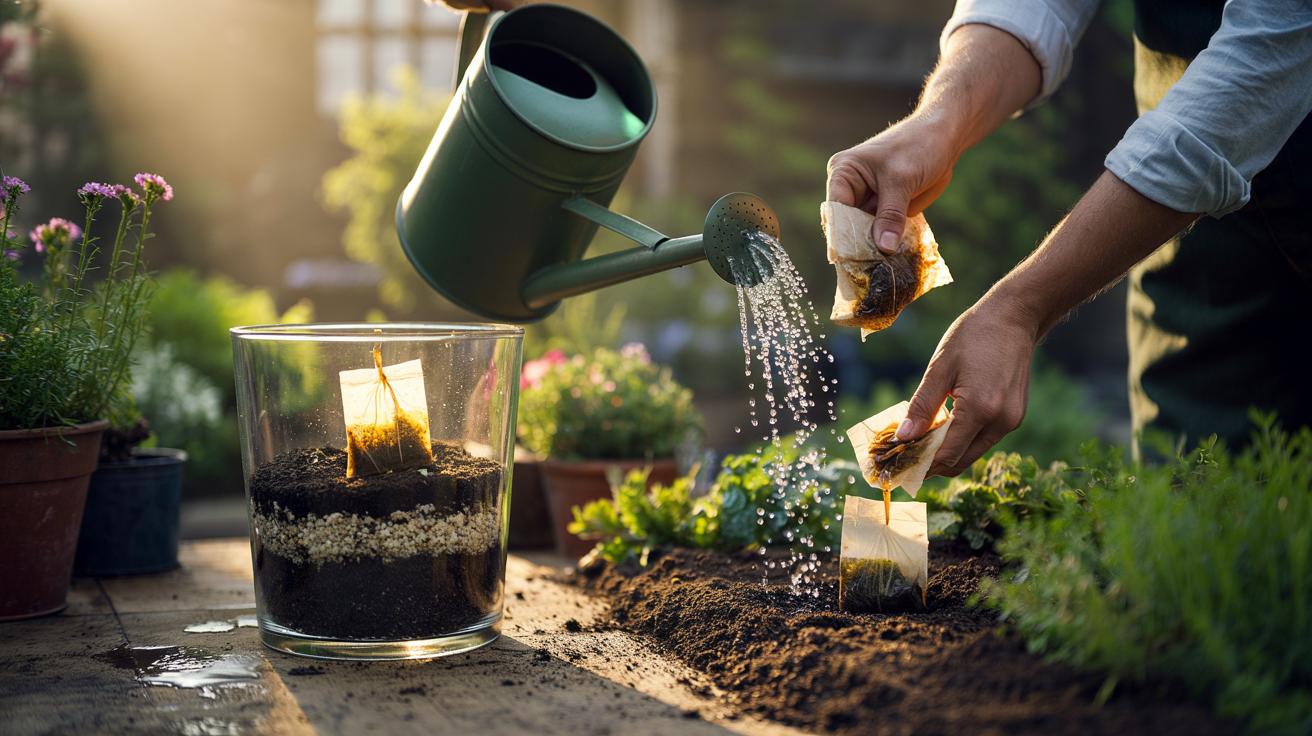
In a nutshell
- 🌱 Tea bags add organic matter, mild acidity, and polyphenols that strengthen soil structure and fuel a thriving soil microbiome for healthier roots.
- 💧 As natural sponges, used bags boost moisture retention, reduce watering frequency, and work as discreet wicks over drainage holes or within hanging baskets.
- ♻️ Versatile in practice: mix leaves as compost “greens”, sprinkle as mulch under shrubs and roses, aid seed starting, and use weak “tea water” to rewet hydrophobic soils.
- 🧪 Choose wisely: stick to black/green tea and biodegradable bags; avoid oily or flavoured blends and any milk/sugar; remove strings/staples; consider pet safety.
- ⚖️ Follow best practice: apply in moderation, bury small amounts to prevent anaerobic patches, and adjust based on plant observation alongside balanced compost or organic feeds.
British gardeners love a thrifty trick, and used tea bags might be the most quietly powerful one in the toolkit. Beneath their humble exterior sits a cocktail of organic matter, gentle acidity, and plant-friendly compounds that enrich soil while helping it hold moisture for longer. When used sensibly, tea bags can boost the microbial life that underpins healthy roots, reduce watering frequency, and add slow-release nutrients. The result? Lusher foliage, steadier growth, and fewer droops in hot spells or wind. Think of tea bags as a soil conditioner first and a nutrient top-up second. Applied the right way, they’re an inexpensive step towards resilient beds, perkier pots, and a greener conscience.
The Science Behind Tea Bags and Soil Health
Tea leaves are essentially finely shredded plant tissue rich in carbon and modest amounts of nitrogen, plus polyphenols such as tannins. As they break down, they add humus, improving soil structure, aggregation, and the pore spaces that roots need to breathe. This spurs a flourishing soil microbiome that helps cycle nutrients and protect roots from stress. Many garden soils, particularly in containers, suffer compaction and nutrient lock-up; the fibrous texture of tea leaves acts like a soft scaffold, keeping particles apart and creating micro-habitats for beneficial fungi and bacteria. Healthy soil is alive, and tea feeds that living engine.
There’s also a gentle pH effect. Most brewed tea is slightly acidic, which can be helpful for acid lovers like blueberries, camellias, and azaleas. It’s not a dramatic shift, but repeated additions near plant bases can nudge conditions in their favour. Importantly, tea leaves supply low, steady nutrients rather than a quick chemical hit, reducing leaching after rain. Black and green teas differ slightly: green tea tends to decompose faster, giving a quicker boost to microbial activity, while black tea can contribute a tad more to structure over time. Tea bags are not a fertiliser miracle, but a steady soil ally.
Hydration Hacks: Tea Bags as Moisture Managers
Used tea bags are brilliant at moderating water. Nestled into potting mixes or laid beneath mulch, they act like soft sponges, holding on to moisture after rain or a watering can passes, then releasing it as the soil dries. That means fewer dramatic swings for roots. Place one or two used bags over drainage holes in planters to slow water loss while preventing compost escape; this doubles as a discreet wick, pulling moisture upwards. In hanging baskets, tuck a layer of bags between the liner and compost to keep the core damp longer. This simple tweak can extend time between waterings by days in warm weather.
For hydrophobic soils that repel water after a hot spell, mix cooled, thoroughly squeezed tea leaves into the top 2–3 cm of compost, then water with lukewarm “tea water” (weakly brewed tea without milk or sugar). The fine particles help break the surface tension, and the faint acidity encourages rewetting. Take care not to oversaturate. Tea’s slight acidity can benefit many ornamentals, but avoid repeated heavy use around lime-loving plants such as lavender. If caffeine concerns you, note that most of it is extracted in the first brew; rinsing used bags in clean water before use will dilute residues further. Hydration balance, not saturation, is the goal.
Practical Uses From Compost to Mulch
In the compost heap, tea bags add “greens” to balance dried leaves, shredded cardboard, and twigs (your “browns”). Break the bag and release the leaves for quicker decomposition; the larger the particle, the slower it breaks down. Many modern UK tea bags are now plant-based, yet some still contain polypropylene heat seals—remove strings and staples, and check your brand if you’re aiming for fully compostable inputs. Scatter leaves in thin layers to avoid claggy mats that exclude air. Aeration is everything in a healthy heap. Pair tea leaves with corrugated cardboard or straw to keep the pile breathing.
As a surface mulch, sprinkle spent leaves beneath shrubs and roses, then cap with bark or leafmould to lock them in place. This team effort smothers weeds, regulates temperature, and builds humus. Seed-starting? Mix a pinch of dry, cooled tea leaves into sterile seed compost to add texture, or sit a moistened bag beneath cell trays as a micro-wick for consistent moisture. You can also steep a few used bags in a watering can for 10–15 minutes to make a mild “compost tea” substitute. It’s not a nutrient rocket, but it’s a kind, steady drink for young plants recovering from pricking out or transplant shock.
Choosing Teas, Bags, and Safety
Not all teas, and not all bags, are equal in the garden. Plain black and green tea are safe bets. Many herbal blends are also fine, but strongly flavoured or oily infusions (spiced chai with added flavourings, citrus-peel blends, or teas with essential oils) can inhibit microbes or attract pests. Avoid anything with milk or sugar contamination. If in doubt, empty the leaves and compost the plant matter only. For bags, look for brands using biodegradable plant-based fibres and avoid shiny or sealed meshes that can persist in soil. When you’re unsure, open the bag and compost the leaves, bin the wrapper.
| Tea Type | Key Compounds | Best For | Notes |
|---|---|---|---|
| Black Tea | Tannins, polyphenols | Soil structure, mulch | Slow, steady breakdown |
| Green Tea | Polyphenols, mild nitrogen | Microbial boost | Faster decomposition |
| Herbal (e.g., chamomile) | Aromatic compounds | Surface mulch, seed trays | Avoid heavily flavoured blends |
Use moderation to prevent soggy, anaerobic patches. Bury small amounts near the root zone rather than dumping a handful in one spot. If mould appears on stored bags, compost them promptly; do not apply fuzzy bags directly around tender stems. Keep pets away—some dogs are sensitive to caffeine. Finally, test and observe. If a plant shows yellowing, reduce tea inputs and top up with balanced compost or a gentle organic feed. Small, regular additions beat occasional excess every time.
Whether you’re tending a balcony pot or an allotment row, used tea bags are a clever way to nurture soil and stretch watering intervals without splashing cash. They add texture. They feed microbes. They cradle moisture where roots need it most. With a bit of brand awareness and tidy technique, your plants will show the difference in weeks. So, will you try tea bags as a soil conditioner, a mulch partner, or a hydration hack first—and what results will you track in your garden?
Did you like it?4.5/5 (21)