In a nutshell
- 🍌 Banana peels provide a quick overnight boost of potassium with supporting phosphorus and calcium, plus sugars and polyphenols that stimulate soil microbes for stronger stems and better bud set.
- ⏱️ The overnight soak: slice one peel per litre, soak 8–12 hours, strain, and water at the base; use fresh, and add spent strips to the compost or a worm bin—not on the soil surface.
- ⚗️ Fast-track options: a diluted hot-wash extract (30–60 minutes) or a strained blended slurry for microbe support; avoid burying whole peels and uncontrolled fermentation that attracts pests.
- 🌹 Best candidates: tomatoes, chillies, roses, geraniums, and dwarf citrus; go easy on succulents, cacti, and orchids; keep off edible leaves and test acid lovers like blueberries.
- 🔑 Use as a gentle top-up, not a complete fertiliser; pair with balanced feeding, good light, and steady watering, and watch for gnats or sour odours to adjust frequency.
Stop binning banana peels. They’re a ready-made, plant-safe tonic you can turn into an overnight boost for pots, borders, and tomatoes on the patio. The trick is simple: release a flush of potassium, a dab of phosphorus and calcium, plus organic acids that cheer on soil life, without waiting weeks for composting. Think of it as a light breakfast for roots, not a full roast. Used well, it’s tidy, cheap, and surprisingly effective for early flowers and sturdy stems. Done badly, it can attract flies or go slimy. Done right, it takes minutes before bed, and your plants sip it the next morning.
How Banana Peels Feed Soil Overnight
Banana peels are rich in potassium (K), with useful amounts of phosphorus (P), calcium (Ca), and traces of magnesium. When you submerge thinly sliced peels in clean water, cell walls soften and soluble compounds leach out quickly. By morning, you’ll have a mild, slightly amber “peel tea” that delivers a small, readily available dose of nutrients to the root zone. This is not a heavy fertiliser; it’s a gentle top-up that encourages strong stems, better bud set, and improved stress tolerance. The organic molecules also stimulate microbes that help unlock tied-up nutrients in potting mixes.
There’s another gain: peels contain polyphenols and sugars that energise the soil food web. Microbial activity rises, which can nudge pH stability and improve crumb structure around roots. Because the extract is weak, you reduce the risk of fertiliser scorch on tender seedlings. That makes it handy for balcony gardeners and houseplant keepers who want a soft, regular feed between bigger, scheduled fertiliser applications.
One caveat is speed versus substance. An overnight soak pulls out light, mobile compounds, not the full nutrient load you’d get from fully composted peels. Keep expectations realistic, and treat the method as a supplementary practice rather than a full nutrition plan.
The Overnight Peel-Soak Method: Step-by-Step
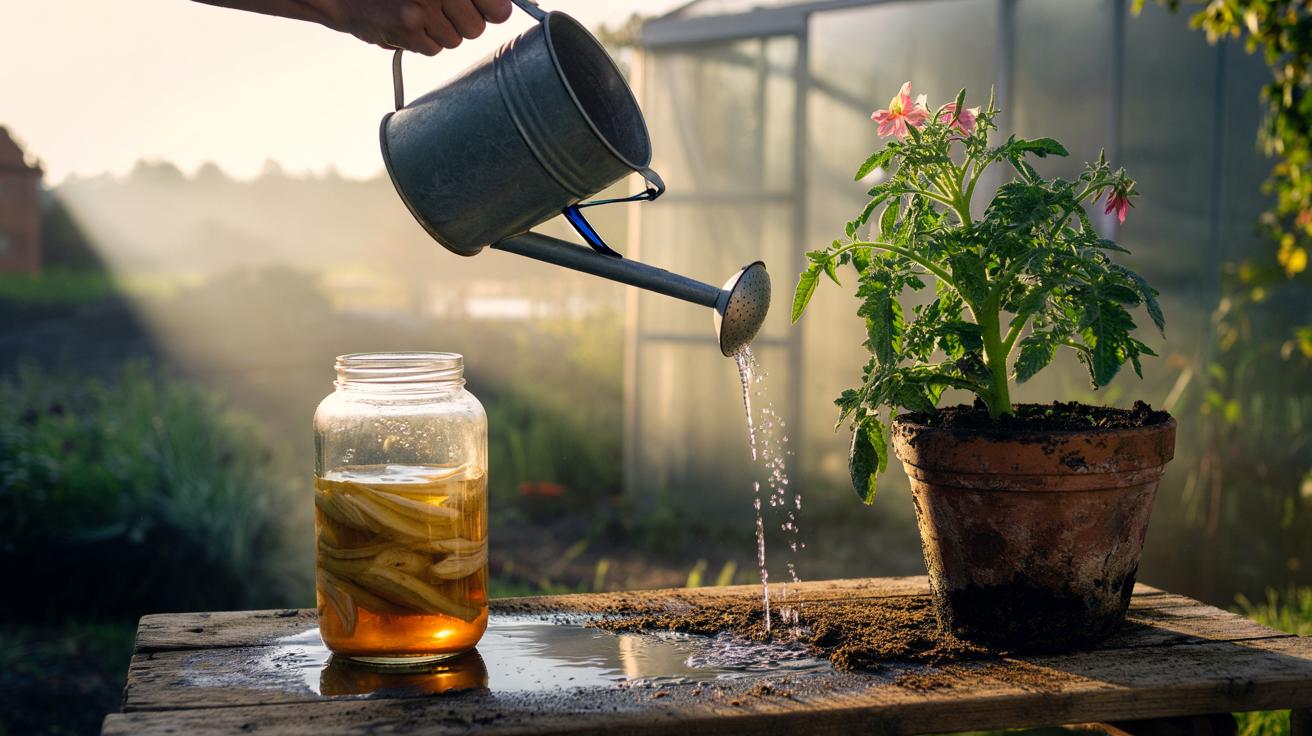
Start with one fresh peel per litre of room-temperature water. Rinse to remove stickers or waxy residues, then slice the peel into thin strips to increase surface area. Submerge in a clean jar, weigh down with a spoon so everything stays wet, and cover loosely. Leave on the counter 8–12 hours. In the morning, strain through a sieve. Use the liquid straight away; freshness matters. Water the base of your plants, avoiding foliage, until the pot just begins to drip from drainage holes.
For outdoor beds, apply around 250–500 ml per plant, depending on size and soil moisture. Houseplants and seedlings need less. The spent peel strips? Either add to your compost, bury shallowly under mulch away from stems, or feed to a worm bin. Don’t leave pieces on the surface; they attract fruit flies and look messy.
Use weekly during flowering or when plants are under light stress—heat, after pruning, or transplant shock. Avoid using on the same container repeatedly if you notice sour odour or fungus gnats; rotate plants or reduce frequency. If your tap water is very hard, consider filtered or boiled-and-cooled water to keep salts low and flavour neutral for soil microbes.
Beyond the Soak: Fast-Track Options and What to Avoid
If you need alternatives, try a hot-wash extract: pour recently boiled water over sliced peels, steep 30 minutes, cool, then dilute 1:1 before use. It’s quicker, a touch stronger, and fine for hardy ornamentals. Another option is a blended peel slurry—blend one peel with 500 ml water, then strain well and dilute to a pale straw colour. This delivers tiny particulates that continue feeding microbes over several days. For indoor plants, keep it light and use sparingly.
What to skip? Don’t bury whole peels next to stems “for speed”—they rot slowly, can harbour mould, and may invite pests. Avoid fermenting peels on the kitchen counter for multiple days unless you’re doing controlled Bokashi; otherwise, you’ll create a smelly, gnat-loving brew. Be wary of claims that banana peels fix every deficiency. They don’t supply nitrogen in meaningful amounts, and they won’t replace a balanced feed during heavy growth.
| Method | Time | Main Benefit | Caution |
|---|---|---|---|
| Overnight soak | 8–12 hours | Quick potassium top-up | Use fresh; avoid foliage |
| Hot-wash extract | 30–60 minutes | Stronger, fast feed | Dilute 1:1 before watering |
| Blended slurry | 10 minutes | Microbe stimulant | Strain for indoor use |
| Whole peel burial | Weeks | Slow composting | Attracts pests; slow |
What Plants Benefit Most—and Which to Skip
Plants that crave potassium shine with this approach. Think tomatoes, chillies, roses, geraniums, and flowering annuals that need sturdy stems and clean bud formation. Fruiting houseplants—dwarf citrus, ornamental peppers—also enjoy a gentle K nudge between standard feeds. On lawns, a strained, diluted application can perk up patchy edges without risking burn, though it’s no substitute for seasonal lawn care.
Be cautious with succulents, cacti, and orchids. They prefer measured, specialist fertilisers and drier roots; the sugar content in peel extracts can encourage algae or fungus in compacted potting media. Leafy veg like lettuce or spinach? Fine at the soil line, but don’t splash the leaves you plan to eat. For acid lovers such as blueberries and azaleas, test first; the extract is mild, but consistent applications can shift pot chemistry. Always observe: if you see gnats or a sour smell, pause, aerate the soil, and resume at longer intervals.
Above all, pair the trick with basics—adequate light, steady watering, and a balanced fertiliser schedule. The peel boost is the garnish, not the main course.
Used thoughtfully, banana peels become a nimble, near-zero-cost ally—a small act at night that leaves soil livelier by morning. Expect brighter blooms, stronger stems, and fewer droops on hot days, not miracles. Keep it fresh, light, and tidy, and your plants will respond. Ready to trial it for a fortnight, note the differences, and then decide whether it earns a permanent spot in your gardening routine?
Did you like it?4.6/5 (29)