In a nutshell
- 🧪 The science: Avocados brown when polyphenol oxidase (PPO) meets oxygen; cut onions release sulphur volatiles that inhibit PPO, slowing oxidation without relying on acidity.
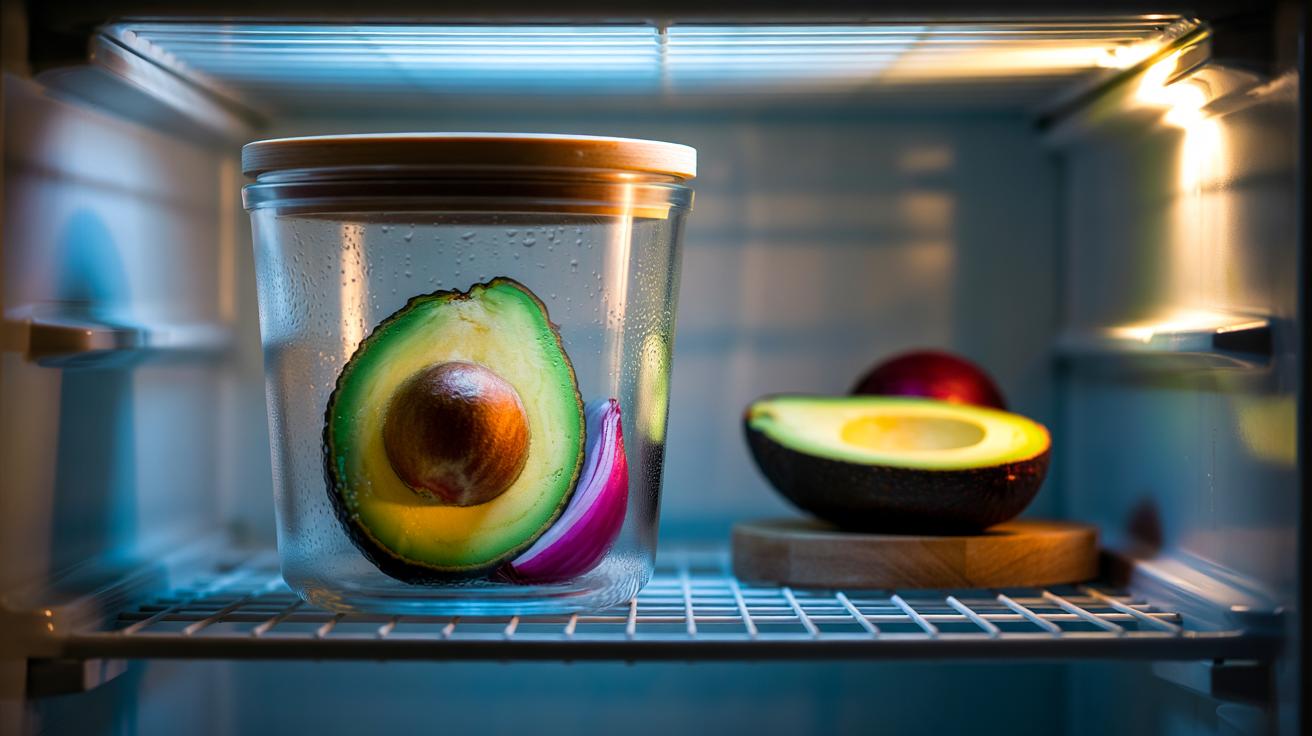
- 🥑 How-to: Place a 5–7 mm red onion slice in an airtight container, set the avocado cut-side up (pit in), keep the cut surface from touching onion, seal, and refrigerate for a greener window of roughly 2–8 hours.
- ⚖️ Alternatives compared: Lemon/lime adds tang, oil forms a slick barrier, water reduces air but can dilute, and wrap/vacuum cuts oxygen—each with trade-offs; onion is a cheap, gentle middle path and can be combined with acid.
- 🧊 Safety and quality: Keep at 5°C or below, use within 24 hours, discard if off odours appear, consider onion sensitivity; it’s a short-term quality boost, not a long-term preservation method.
- 💡 Culinary tips: Great for guac prep and toast; tune flavour by choosing red/white onion or shortening chill; pair with citrus for longer coverage and minimise waste without sacrificing clean avocado taste.
Avocado lovers know the heartbreak: that perfect jade-green flesh turns muddy brown in minutes. Yet there’s a quietly brilliant kitchen trick that buys you precious time. Slip a slice of onion into the storage container and the avocado stays greener for hours, ready for toast, tacos, or tacos at midnight. It sounds like folk wisdom, but there’s solid chemistry behind it, and some practical caveats any home cook should note. In British kitchens, where minimising waste and maximising flavour matter, this tip earns its keep. Used correctly, the onion-and-avocado pairing slows oxidation without turning your fruit into an onion bomb.
Why Avocados Brown and How Onions Intervene
Cut an avocado and you expose phenolic compounds in the flesh to air. The enzyme polyphenol oxidase (PPO) grabs oxygen and transforms those compounds into brown pigments called melanins. Warmth and air accelerate this chain reaction. That’s why a beautifully ripe avocado will discolour faster on a sunny worktop than in a cool fridge. The onion trick interrupts this dance. Onions, once cut, release sulphur compounds (notably thiosulfinates) that drift through the container. These volatiles can interfere with PPO activity at the fruit’s surface, essentially lowering the enzyme’s punch and slowing the formation of browning pigments.
There’s also a mild antimicrobial and antioxidant nudge at play, not to mention a tiny bit of moisture that helps limit oxygen exposure. But it’s the sulphur chemistry doing the heavy lifting, not acidity, because onions aren’t especially acidic. Think of the onion slice as a temporary bodyguard—effective for several hours, then the enzyme eventually rallies. You’ll still need cool storage and a snug container, because oxygen remains the enemy. Keep the avocado chilled and covered, and the onion’s aromatic shield buys time without heavy-handed flavouring.
Step-by-Step: The Onion Slice Method
First, choose a shallow, airtight container that fits your avocado halves comfortably. Lay a 5–7 mm slice of red onion (milder aroma and a touch sweeter) on the base. Place the avocado half cut-side up, ideally with the pit still in, on a rack or directly in the container so it’s not pressed into the onion. Seal and refrigerate. Crucially, keep the cut surface from directly touching the onion to limit flavour transfer. After two to four hours, you should find vivid green flesh that’s still perky. If storing longer, check at intervals and skim the thinnest layer if needed before serving.
For guacamole prep, scatter a bed of chopped onion in the container, set plastic wrap directly onto the dip’s surface, and lid it. The onion’s volatiles circulate while the wrap excludes oxygen—belt and braces. Sensitive to onion flavour? Swap red for white and shorten the chill time. Rinse the surface lightly, pat dry, or shave off a wispy layer if the aroma lingers. This technique extends freshness for hours, not days, and works best alongside cool temperatures and minimal air. Use within 24 hours for peak quality, and always taste before plating.
How It Compares With Other Browning Fixes
Plenty of strategies slow avocado browning, each with trade-offs in taste, texture, and timing. The onion method is gentle, cheap, and quick to set up. Acidic barriers—such as lemon or lime—are reliable but can tilt your flavour profile sharply towards citrus. A thin oil film blocks oxygen but may leave a slick mouthfeel. Water baths limit air exposure on cut halves, though they can dilute the surface. airtight wrap or vacuum sealing works well but creates plastic waste and requires equipment. Consider the occasion and your flavour tolerance before choosing your fix.
| Method | How It Works | Flavour Impact | Typical Window |
|---|---|---|---|
| Onion Slice | Sulphur volatiles inhibit PPO; aromatic barrier in sealed container | Low to moderate if not touching | 2–8 hours |
| Lemon/Lime Juice | Acid lowers pH; antioxidants slow browning | Noticeable citrus tang | 4–12 hours |
| Oil Coating | Physical barrier blocks oxygen | Mild richness, possible slickness | 2–6 hours |
| Water Bath | Excludes air from cut surface | Neutral; risk of slight dilution | 2–6 hours |
| Airtight Wrap | Minimises air contact | Neutral | 4–12 hours |
For minimal flavour drift, onion plus airtight storage is a smart middle path. If you’re building guacamole later, the onion head start dovetails with your recipe’s base aromatics. For pure avocado toast, a shorter chill reduces cross-aroma. The table above is a guide, not gospel: ripeness, fridge temperature, and container fit all sway outcomes. Mix and match—lemon on the surface and a slice of onion beneath—if you need a longer window without overwhelming the palate.
Safety, Quality, and Culinary Creativity
Food safety first: keep your avocado and onion refrigerated at 5°C or below, and aim to use the fruit within 24 hours. If any off odours or slippery patches appear, bin it. Onion-sensitive diners or those following a low-FODMAP plan should keep contact brief and consider gentler options like a thin citrus brush. Do not rely on the onion method for multi-day storage; it’s a short-term quality boost, not preservation. For longevity, make a zesty guacamole with acid, cover directly with film, and chill.
Creatively, the hack doubles as flavour mise en place. The subtle onion whisper sets up avocado for salsa, tacos, or a lunchtime salad. You’re also fighting waste: delaying browning means fewer discarded halves and more spontaneous meals. Try red onion for a soft berry-like aroma, white for punch, or shallot for finesse. Pair with flaky sea salt, chilli, or miso for contrast. The take-home: the onion trick is small, clever, and economical—kitchen craft meeting everyday chemistry.
In a world of overcomplicated gadgets, a simple onion slice proves that science-led hacks can be elegant and thrifty. The sulphur story is subtle yet powerful, disarming PPO long enough for you to plate with pride. Use a good container, keep things cold, and don’t let the cut face touch the onion if you want a cleaner flavour. Hours of extra green is entirely achievable, days are not. Ready to test it in your own kitchen, and which flavour path will you choose—onion’s gentle guard, citrus brightness, or a hybrid approach?
Did you like it?4.3/5 (21)