In a nutshell
- 🍞 Foil creates a tight moisture barrier, slowing staling and aroma loss while keeping crumb supple and crust reasonably firm.
- 🧪 The science: controlling water migration and starch retrogradation; foil’s low vapour and oxygen permeability outperforms plastic (condensation risk) and paper (excessive drying).
- 🛠️ Technique matters: never wrap warm bread, seal the cut face tightly, leave the crust slightly looser, and store at room temperature (not the fridge) overnight.
- 🔥 Morning reset: briefly bake unwrapped at 180°C for 5–8 minutes to drive off surface moisture and re-crisp the crust without drying the crumb.
- ⚠️ Avoid common pitfalls: don’t pre-slice whole loaves; use foil + tea towel for very crusty bread, full foil for enriched loaves, and double-wrap for the freezer.
There’s a small domestic miracle happening on your counter while you sleep. Wrapped right, last night’s loaf wakes up tasting like itself. Wrapped wrong, it greets the morning dull and dry. The trick? Foil. It’s not nostalgia from your nan’s kitchen; it’s practical food science. By creating a snug, low-permeability moisture barrier, foil slows staling and protects the crust. Treat the loaf as a living structure that breathes, loses water, and reshuffles its starches overnight. Do that, and your bread will reward you at breakfast with chew, spring, and aroma that still feels bakery-fresh.
The Overnight Science: Moisture, Staling, and Retrogradation
To keep bread fresh, you’re not fighting time so much as water migration and starch retrogradation. After baking, gelatinised starches slowly recrystallise, pushing water out into the crumb and then into the air. That’s staling. When moisture escapes unchecked, the crumb toughens and flavours fly with it. Slightly slowing the bread’s moisture loss keeps the crumb supple and aromatic for the morning slice. The crust is trickier: it wants to stay dry and brittle, yet the interior wants humidity. You need a barrier that limits escape without turning the loaf soggy.
This is where aluminium foil earns its keep. Its very low moisture vapour transmission and near-zero oxygen permeability hold water and aroma molecules close, reducing the gradient that pulls moisture out of the crumb. Paper breathes too freely, letting a loaf desiccate. Plastic traps humidity, but it can smother the crust and encourage condensation if the bread is even slightly warm. Foil strikes a middle ground when applied thoughtfully: tight enough to seal, loose enough to spare the crust. The result is a loaf that tastes like the day it was cut, not a day older.
Why Foil Outperforms Plastic and Paper
Plastic (cling film) is almost airtight, which sounds ideal until you open it to find a limp crust and damp patches from condensed steam. Paper is kind to crusts, cruel to crumbs. Foil excels because it blocks gas and moisture but can be shaped—snug around the cut face, relaxed around the loaf’s body—controlling humidity where it matters. Seal the exposed crumb tightly, and let the crust breathe a touch through tiny gaps at the ends. That microclimate safeguards texture: moist crumb, stable aroma, and a crust that hasn’t surrendered all snap.
For the numbers-driven cook, barrier behaviour explains the results. Oxygen exposure speeds aroma loss and oxidation of fats in enriched breads; water vapour escape dries the crumb. Foil’s very low permeability slows both, while its form-fitting nature prevents the open edges that leak moisture overnight. Plastic can do similar, but its tendency to cling everywhere is a crust killer. Paper protects from dust, not dehydration. In short, foil gives you control, not a gamble.
| Method | Moisture Control | Crust Outcome | Best For |
|---|---|---|---|
| Foil | Excellent seal; adjustable fit | Stays firmer than with plastic | Overnight loaves, cut bread |
| Plastic (cling film) | Very high; risk of condensation | Often softens to limp | Sliced sandwich loaves |
| Paper bag | Poor; loses water quickly | Great initially, then stale | Short rests, crusty boules |
| Bread bin | Moderate; depends on fit | Decent balance if not overfilled | Whole loaves, 1–2 days |
| Fridge | Low humidity; speeds staling | Firmer, drier crumb | Only for mould control |
Practical Wrapping Techniques for Maximum Freshness
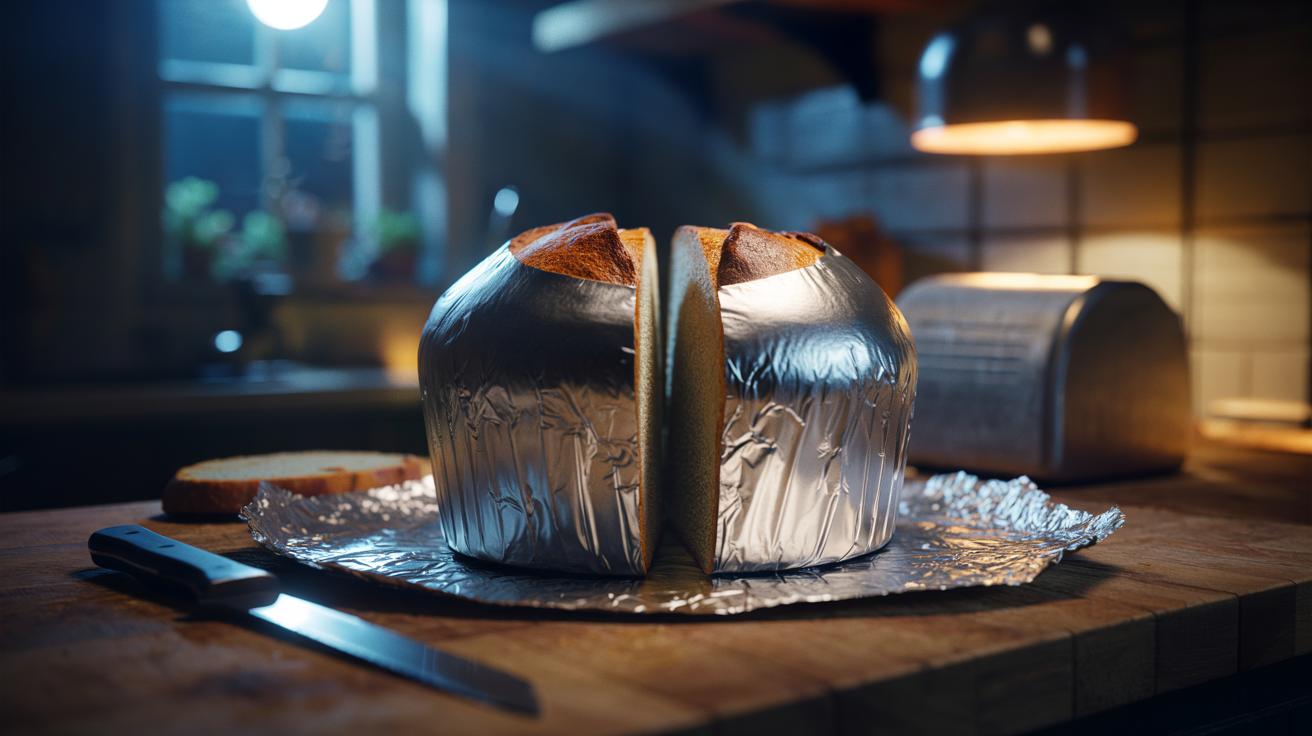
Start with temperature. Never wrap bread that’s warm to the touch. Trapped steam condenses, then your crust collapses and the crumb turns clammy. Wait until fully cool. For a cut loaf, place the halves back together, crust to crust, aligning the crumb to limit exposed surface. Now wrap: hug the join tightly with foil, pressing along the cut edge to create a clean seal. Leave the loaf’s shoulders slightly looser so the crust isn’t suffocated. If it’s a baguette, wrap the cut end tightly and spiral a looser layer along the length.
Shiny side in or out? It doesn’t matter for bread; the sides are functionally identical here. What does matter is coverage and contact. Focus on eliminating gaps near the cut face, where moisture loss is fastest. Store on a cool worktop or in a bread bin. Avoid the fridge overnight—retrogradation accelerates at low temperatures, pushing water out of starch and firming the crumb prematurely. Room temperature is your friend for a single night.
In the morning, if the crust is softer than you like, revive it. Slide the unwrapped loaf into a 180°C oven for 5–8 minutes. The heat drives off surface moisture and re-crisps the exterior without drying the crumb. It’s a quick reset that pairs well with foil’s overnight protection.
Common Mistakes and Smart Alternatives
Do not slice the whole loaf “for convenience”. Every cut creates fresh surface area, accelerating water loss. Cut only what you need that evening, then reunite the remaining pieces before wrapping. Avoid stacking still-warm slices inside plastic; the steam will condense, wetting the crumb and inviting mould if held too long. One careless wrap can undo a baker’s day of work.
If foil feels too tight for a very crusty sourdough, use a hybrid method: a thin tea towel to cushion the crust, then a foil band sealing just the cut end. For enriched loaves—brioche, panettone, milk bread—go full foil coverage, because fat-rich crumbs suffer badly from oxidation and aroma loss. For bagels or rolls, place in a small paper bag and then in foil; you gain structure plus a solid moisture barrier. Label the wrap with the date if your household hoards bread like treasure.
When should you skip foil? If the loaf is destined for the freezer. In that case, wrap tightly in foil, then add a freezer bag to prevent freezer burn. For day-two storage beyond the first night, consider a bread bin or a partially closed container, then re-foil the cut face after each slice. Think of freshness as maintenance, not a one-off act. Little routines, big difference at breakfast.
Foil does more than shine; it manages the bread’s microclimate while you sleep, balancing moisture retention with crust integrity. The pay-off is tangible the moment your knife meets the crumb. Aromas linger. Texture holds. Waste shrinks. Treat the loaf as a dynamic food, not an ornament on the counter, and it will treat you back with better toast, better sandwiches, better mornings. One sheet, one night, real results. What will you wrap tonight to put this to the test, and how will you tweak the method for your favourite loaf?
Did you like it?4.6/5 (25)